I've always been interested in people and technology, and how they work together.
Probably makes sense why I'm a Chief Digital Officer. It's the clear thread that runs through my whole career, and it explains most of the decisions I've made.
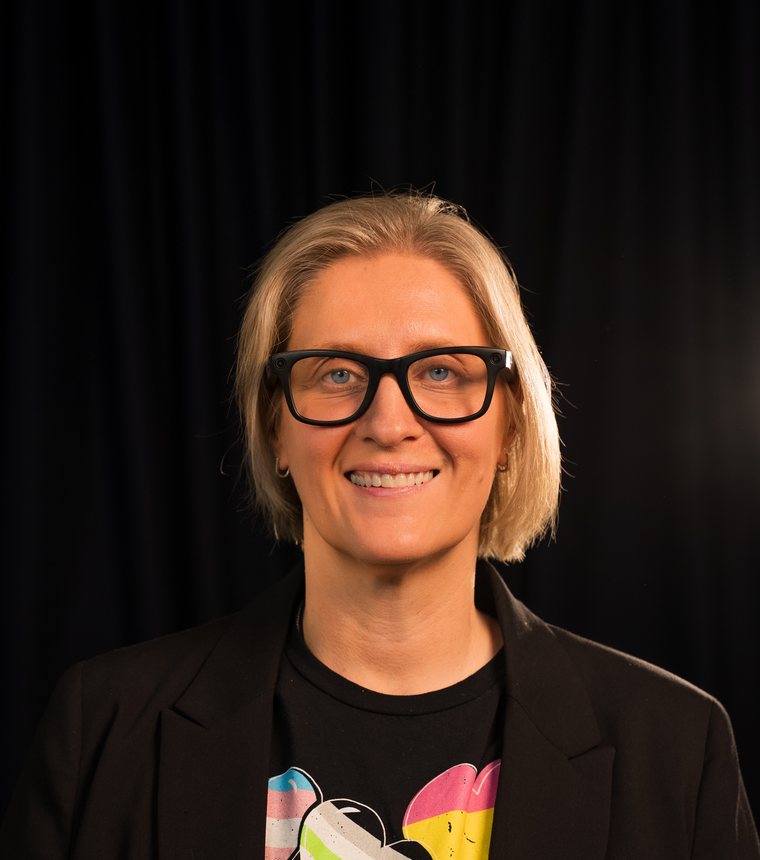
It started with psychology, not computers.
I'm Scottish. I studied psychology and behavioural science at Abertay in Dundee, and for a while I taught it, lecturing sociology, communications and general psych students and marking an unreasonable quantity of exam papers.
What I actually cared about was the question underneath all of it. Why do people do what they do? Why do they resist things that would obviously help them? Why does a perfectly sensible idea die in a room full of sensible people?
I did not set out to work in technology. I've just never stopped asking that question, and technology turned out to be where it got most interesting.
People sometimes assume there was a grand plan behind moving to Australia. There was not. I wanted to live somewhere warmer than Scotland. Twenty years later I am on the Gold Coast and still quietly delighted about the weather.
In 2007 I was building AI chatbots for NASA.
I joined a startup as a content writer and left as its Chief Knowledge Engineer, building conversational systems for NASA, NAB and AMP. The company became Cognea, was acquired by IBM, and is now part of Watson. This was seventeen years before everyone discovered AI. It was clunky, rules-based and nothing like what we have now. But I learned early that the hard part was never the model. It was getting humans to trust it.Then government, at the worst possible time.
In 2010 I became one of the first social media specialists in Australian local government, at Brisbane City Council. Within months I was doing digital crisis communications through the Brisbane floods.
That's a fast way to learn what digital is actually for. Not engagement metrics. People trying to find out whether their street is underwater.
G20 followed. Then a Commonwealth Games.
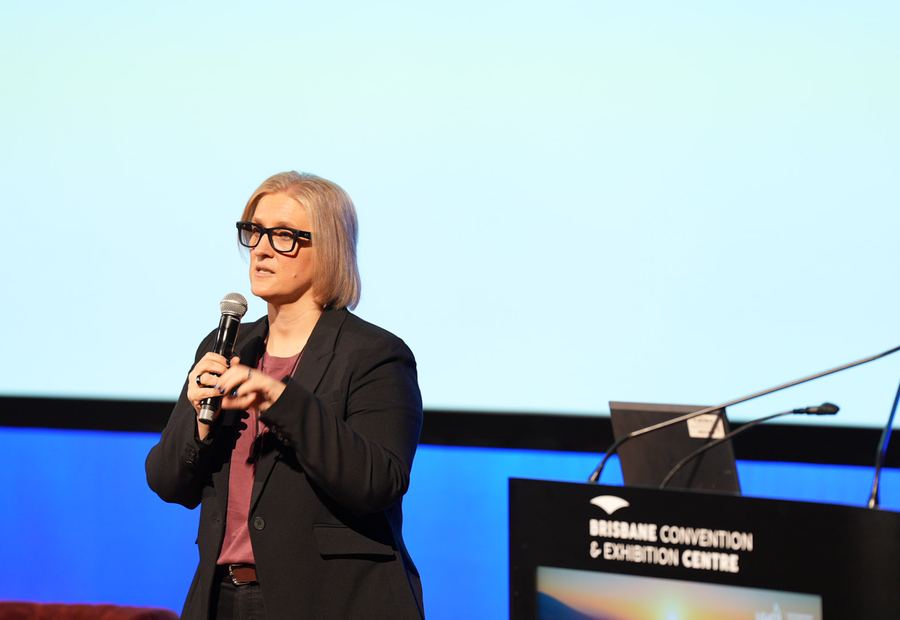
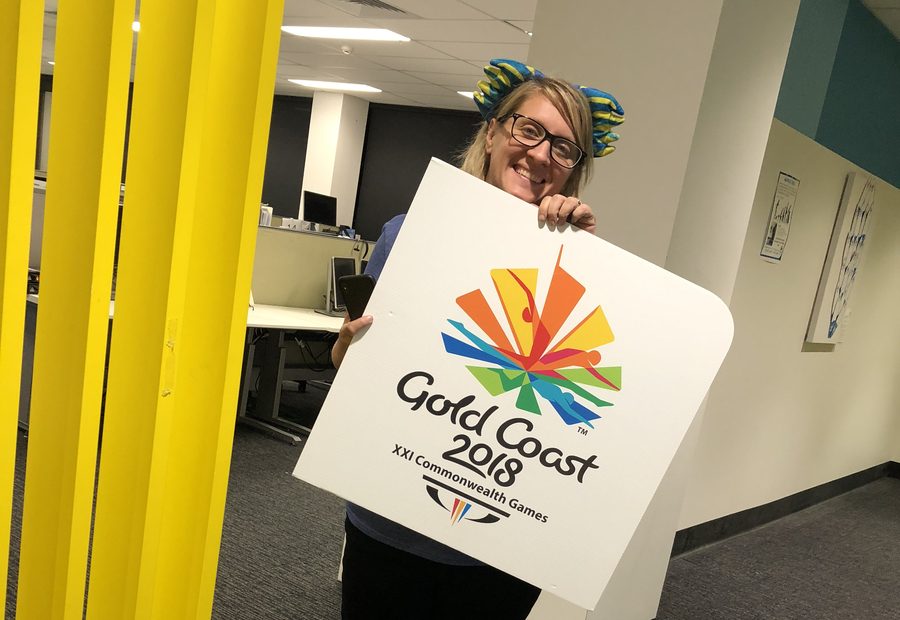
Gold Coast 2018.
I built the digital function for GC2018 from the ground up. One person to a team of twelve, owning web, mobile, social and content for one of the largest international events Australia has hosted.
Transformation with a deadline that genuinely could not move. No quiet delays, no roadmap slippage, and a rather large number of people watching if we got it wrong.
We called ourselves the Digi Ninjas, which tells you most of what you need to know about the culture.
It remains the best leadership lesson I've had. Give people a mission they understand and they will astonish you.
Water, then a whole sector.
After the Games I went to Urban Utilities as Head of Data and Analytics, which is a very different kind of critical. Nobody thinks about water until it stops.
In 2020 I became the inaugural Chief Digital Officer at the Local Government Association of Queensland. I lead digital, data, technology and innovation for LGAQ, and I work across 77 councils on AI, cyber, data and digital transformation.
Along the way the work has been recognised twice, as Women in Digital Executive Leader of the Year in 2021 and Government Technology Leader of the Year in 2026. I mention them because they are useful shorthand, not because they changed anything about the job on the Monday after.
Somewhere in the middle of all that I went back and did an MBA, which was a slightly ridiculous thing to take on alongside an executive role and a young company. I did it for the same reason I do most things. I wanted to understand how the other half of the business actually worked, and reading about it was not going to be enough.
Seventy-seven councils, no two the same.
There is no single definition of digital maturity across Queensland. What works for a large metropolitan council can be completely wrong for a small remote community, and pretending otherwise is how sector-wide programs quietly fail.
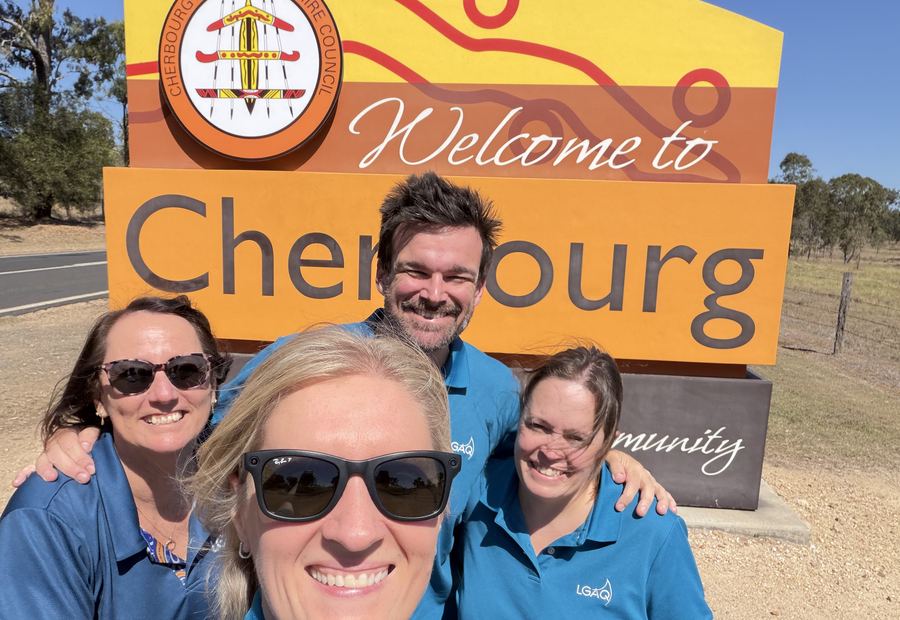
Which is why a meaningful amount of this job happens a long way from a boardroom. You cannot design for 77 councils from a desk in Brisbane.
It is also less futuristic than people expect. An AI blueprint for a sector is not a model or a platform. It is cyber, finance, workforce, IT and comms, argued through with people who have to live with the outcome, then argued through again when something changes.
Along the way there's been an innovation lab, a lot of AI policy and governance, several national working groups, and rather more discussion of mosquitoes than I ever expected.
And then I started a company.
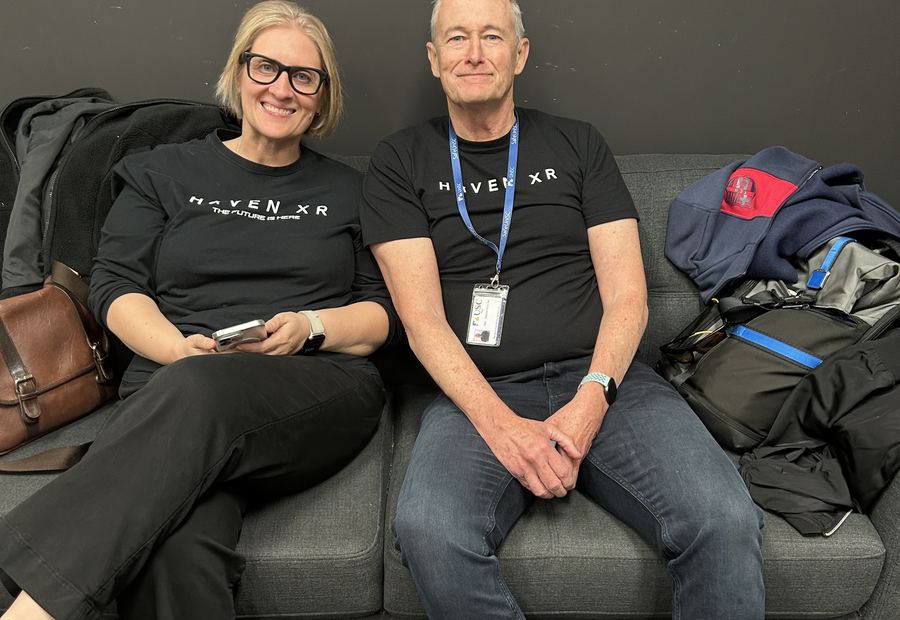
I'm founder and CEO of HavenXR, an immersive entertainment company built around cinematic storytelling, virtual reality and physical space.
Building a technology company is nothing like leading transformation inside an established one. Raising capital, solving hardware problems, shipping something nobody has built before and discovering the bit you were confident about is the bit that breaks.
It has made me a considerably better technology executive, and it permanently cured me of treating innovation as a corporate value statement.
What over twenty-five years has actually taught me.
That the technology is rarely the hard part. That governance done well makes organisations faster, not slower. That most transformation fails politely, in rooms where everyone agreed. That curiosity is the most underrated thing you can hire for. And that being loved is not the same as being necessary.
I also still get disproportionately excited by a clever piece of hardware, which I've stopped apologising for.
The rest of me.
- Scottish by birth, Australian by choice, and I have kept the accent.
- I live on the Gold Coast and work in Brisbane, which makes the M1 a significant part of my life.
- Wife, mother and nonna, which is my favourite job title so far.
- I share a desk, and a nameplate wall, with Billie Whitelaw, Chief Wellness Officer.
- A lifelong gamer. My wife runs a gaming site. I build the plugins when something breaks.
- I'm slightly unhealthily obsessed with Billie Eilish.
- I believe "we've always done it that way" is an invitation to ask another question.
- Optimistic about technology, and equally convinced we need to think much harder about how we use it.
- My spiritual home is definitely California or New York.
What the people who worked for me say.
“If you're looking for a manager who fosters a supportive and positive team culture, Tracy is that manager.”
“She randomly brings in brownies and video games. What more could you ask for in a manager?”
“Tracy's leadership through the journey has been nothing short of amazing. I am very grateful for her mentoring, support and trust.”
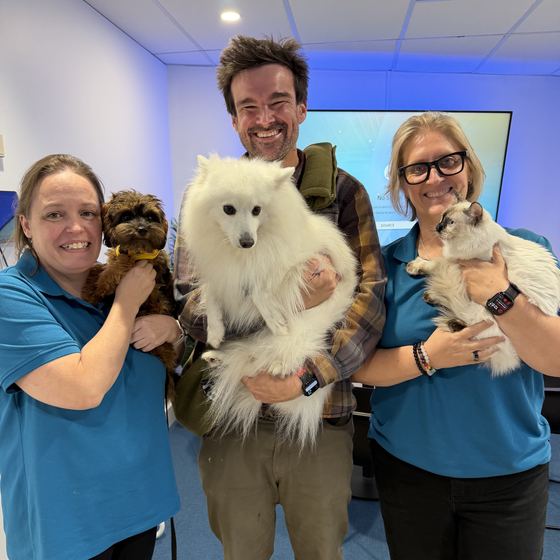
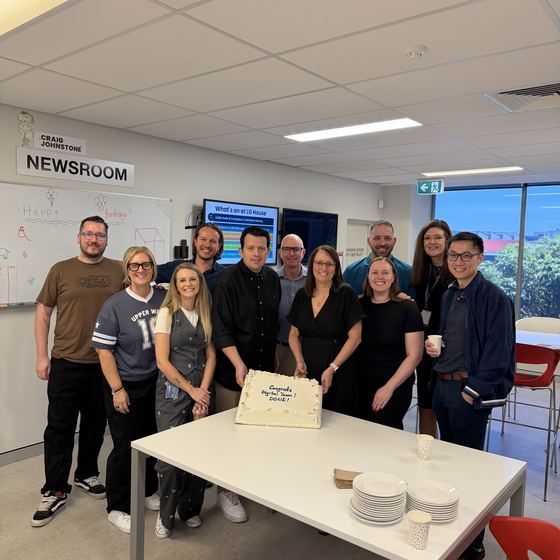
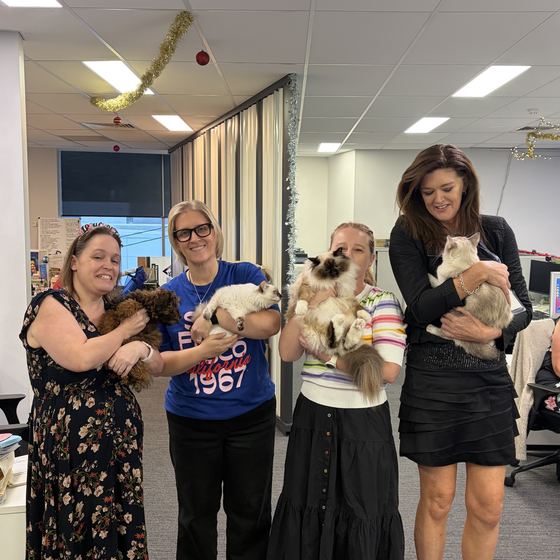
Some evidence for the culture claim.
Still reading? Let's talk.
Transformation, AI, a speaking slot, a board conversation, or something slightly weird. Those are my favourites.
Get in touch